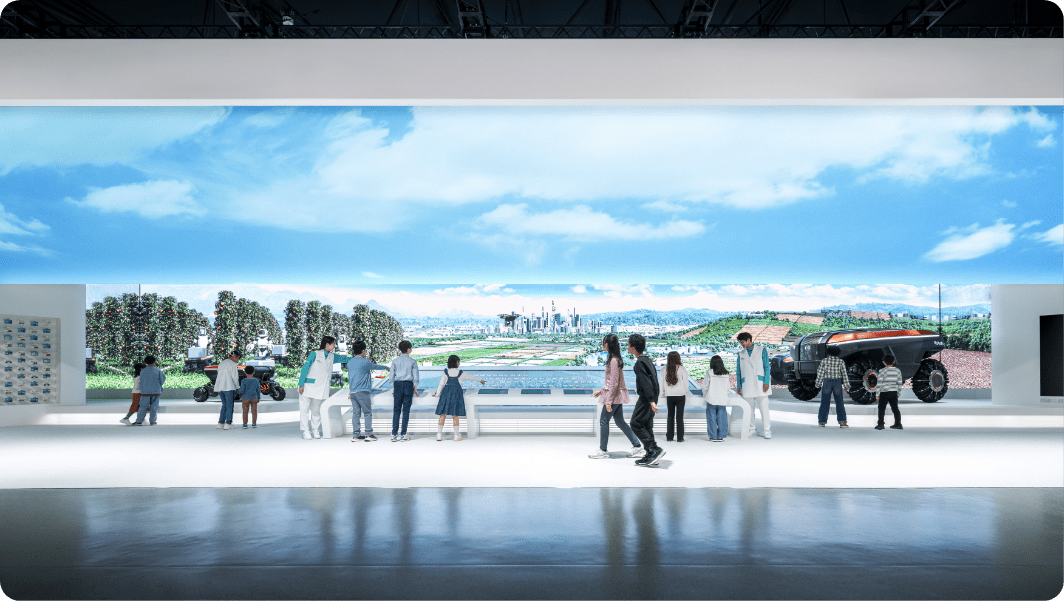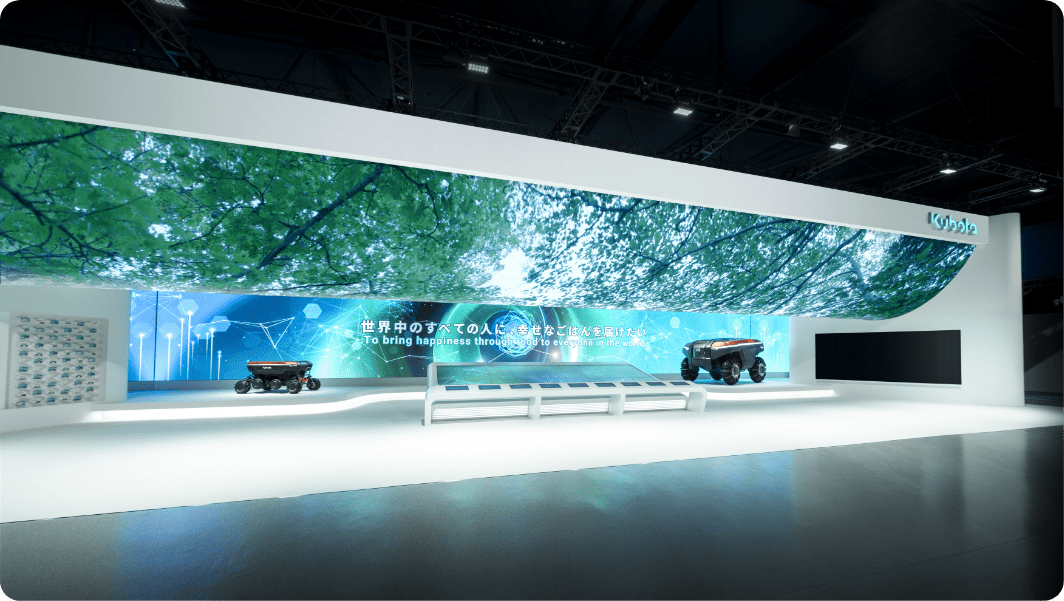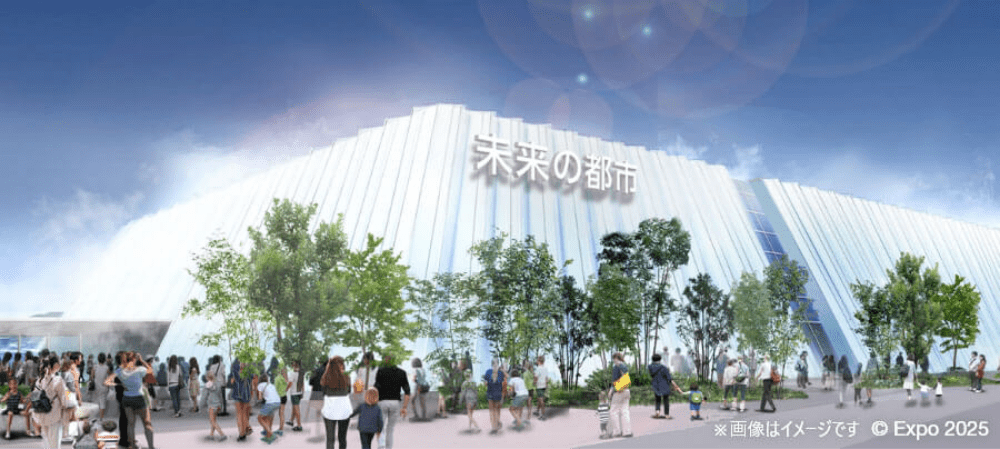


At Expo 2025 Osaka, Kansai, Japan within the Future Life Expo: Future City, Kubota presented an exhibition on the future of
“food and agriculture.”
The exhibition theme was a “laboratory” for exploring planetary-conscious food and agriculture, addressing both human aspirations and global challenges.
We aimed to create this area where will be a place for the “germination” of insights and new ideas for the future of “food and agriculture,” which have evolved alongside humanity and connected lives.


100 years from now, and even further into the future, what will we be eating?
Throughout history, countless people
have contributed to the food we eat.
At the same time, we have refined technology and transformed
agriculture to ensure that
everyone can eat with peace of mind.
In a way, food is proof
of the life we have cultivated.
To consider the future of food and agriculture
is to consider
the future of life itself.
In the years to come, what will food and farming look like?




Experience the exhibition



-
“Everyday foods,” nurtured
by people’s wishes
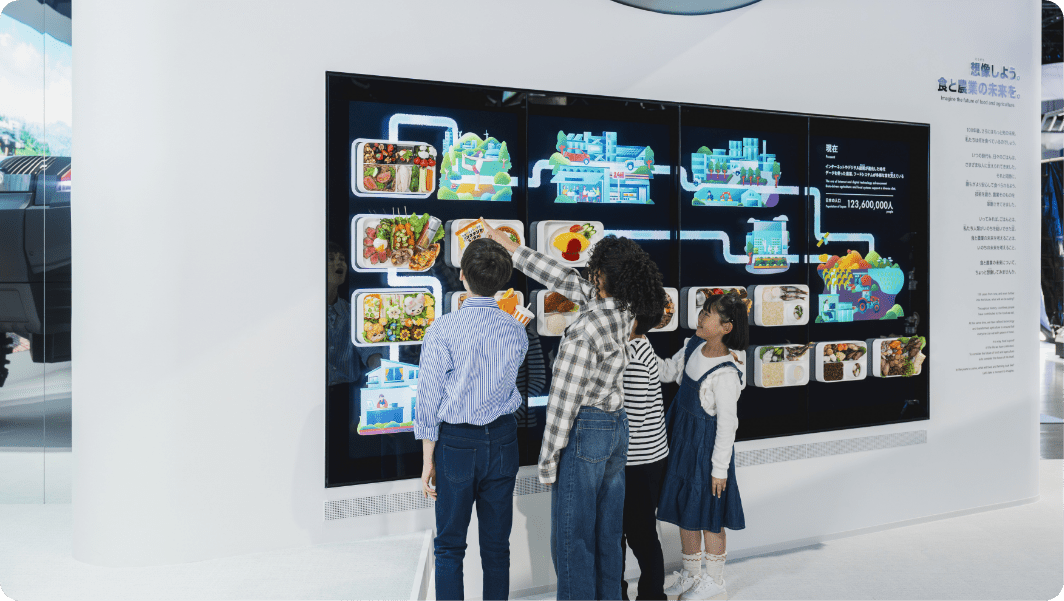
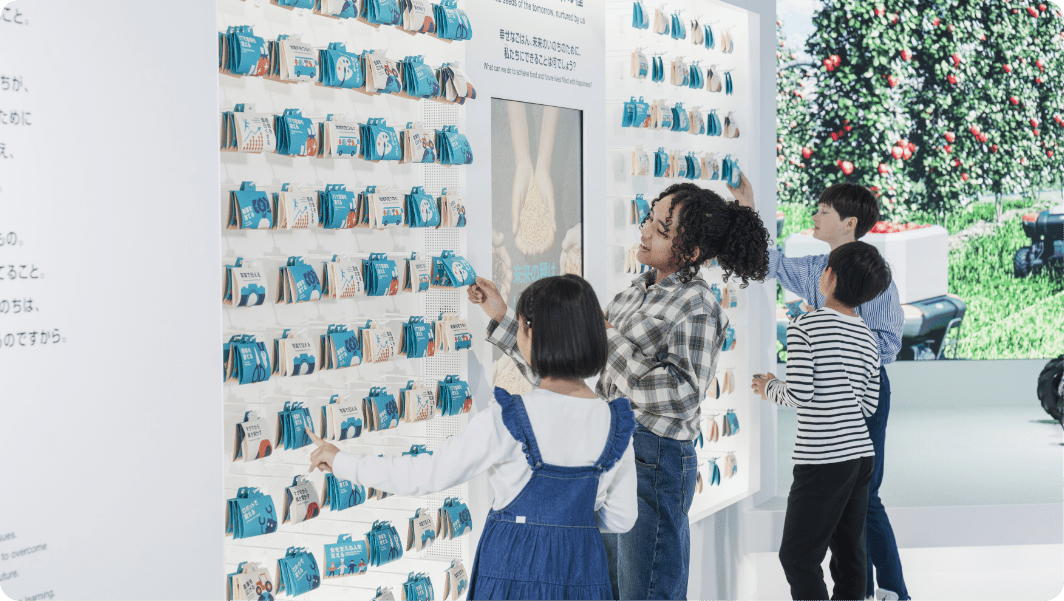
and technologyHere, by representing the transitions of food from Society 1.0 to 4.0 in the form of bento meals, we visually conveyed the evolution of food and society, changes in values, and the cultural, lifestyle, agricultural, and food system backgrounds of each era.
-
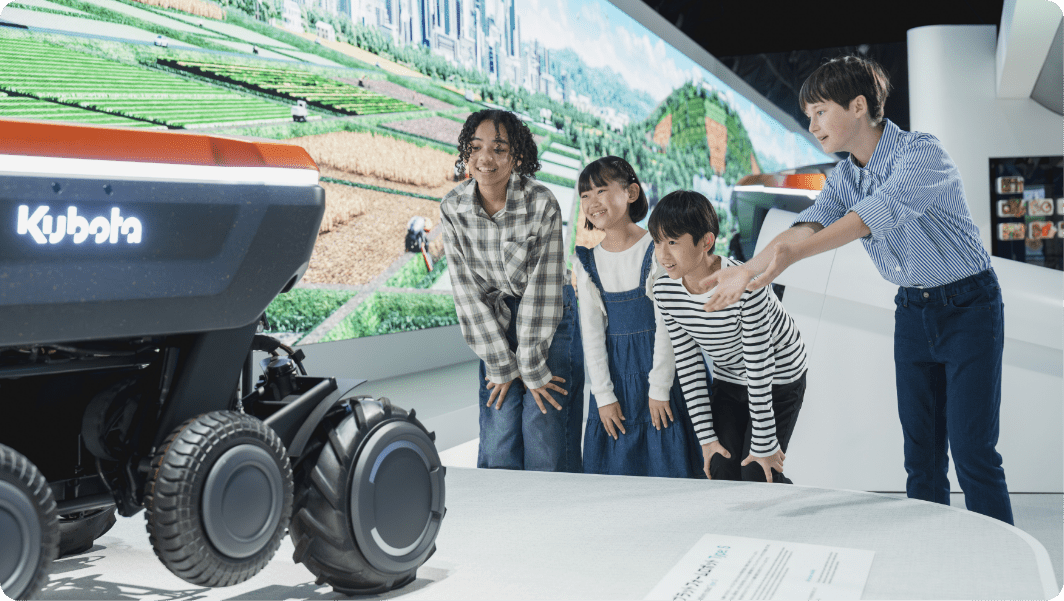
Versatile platform robots for
full automation
and
greening of agricultural operationsTo address the heavy reliance on manual labor still remaining in agriculture, these robots apply precision operations using robotic technology.
Through communication between machines, they enable cooperative yet autonomous work, including simultaneous operation and collaborative tasks among multiple units. In addition, with a new power system, they contribute to reducing greenhouse gas emissions.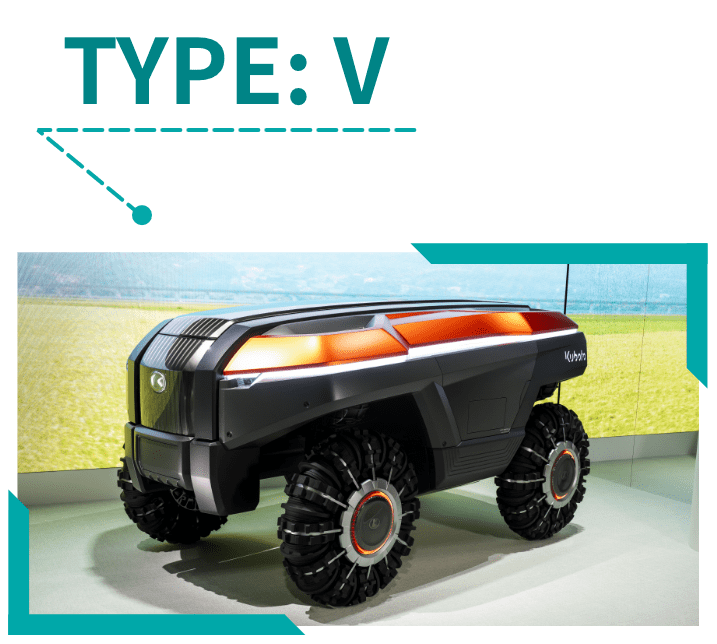
-
01Fully autonomous operation
Advanced intelligence allows the robot to think and make decisions in place of a farmer and perform necessary tasks.
-
02Transformable body structure
From its center, the robot’s body can expand and contract from side to side, up and down, as well as forward and backward, allowing it to transform its shape according to the task at hand.
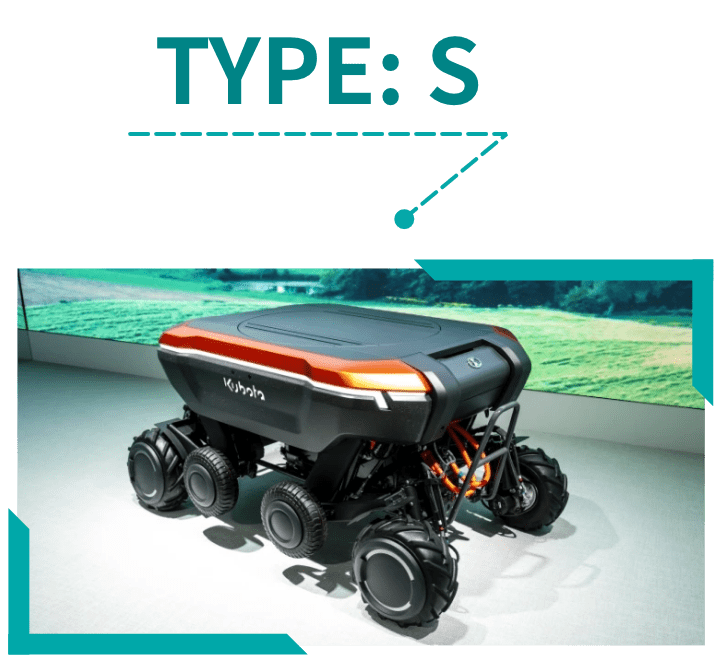
All-terrain mobility
The robot’s powerful drive train gives it excellent traction on all terrain, including on inclines and uneven surfaces.
It also maintains a level deck, enabling stable cargo transportation and high-precision management operations. -
-
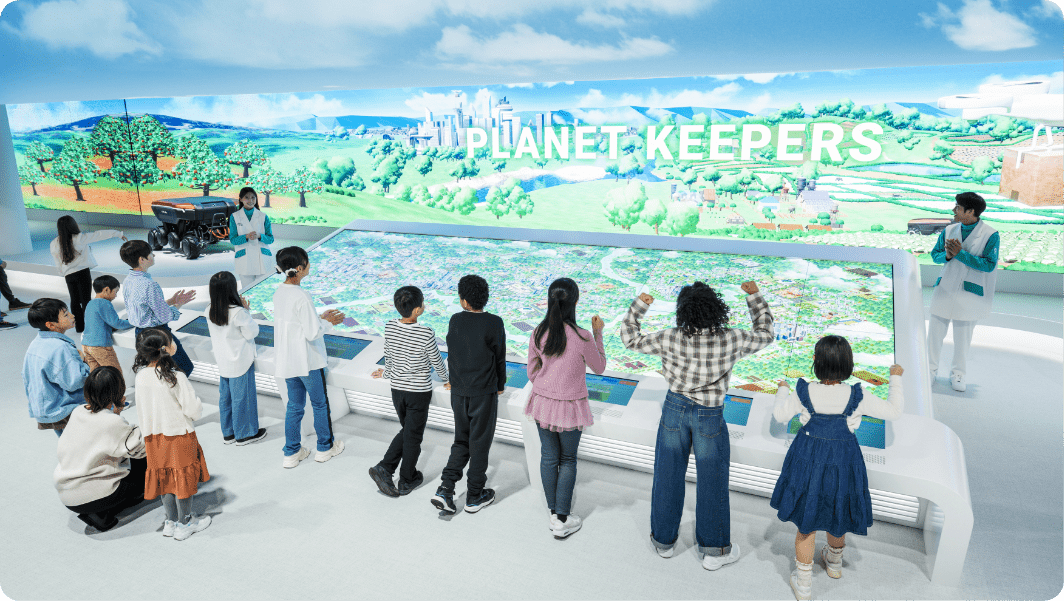
Simulation game: toward
planetary-conscious agricultureIn the world of Society 5.0, what will be needed to deliver happy food to all the people of the world in an
earth-friendly way? This simulation game,
experienced from the perspective of an agricultural manager, lets players shape the future of food and agriculture through the choices they make during the event. -
Everyone’s thoughts
and your own thoughtsMessages from people taking on the challenge of creating
a planetary-conscious future for food and agriculture were made into cards and shared.