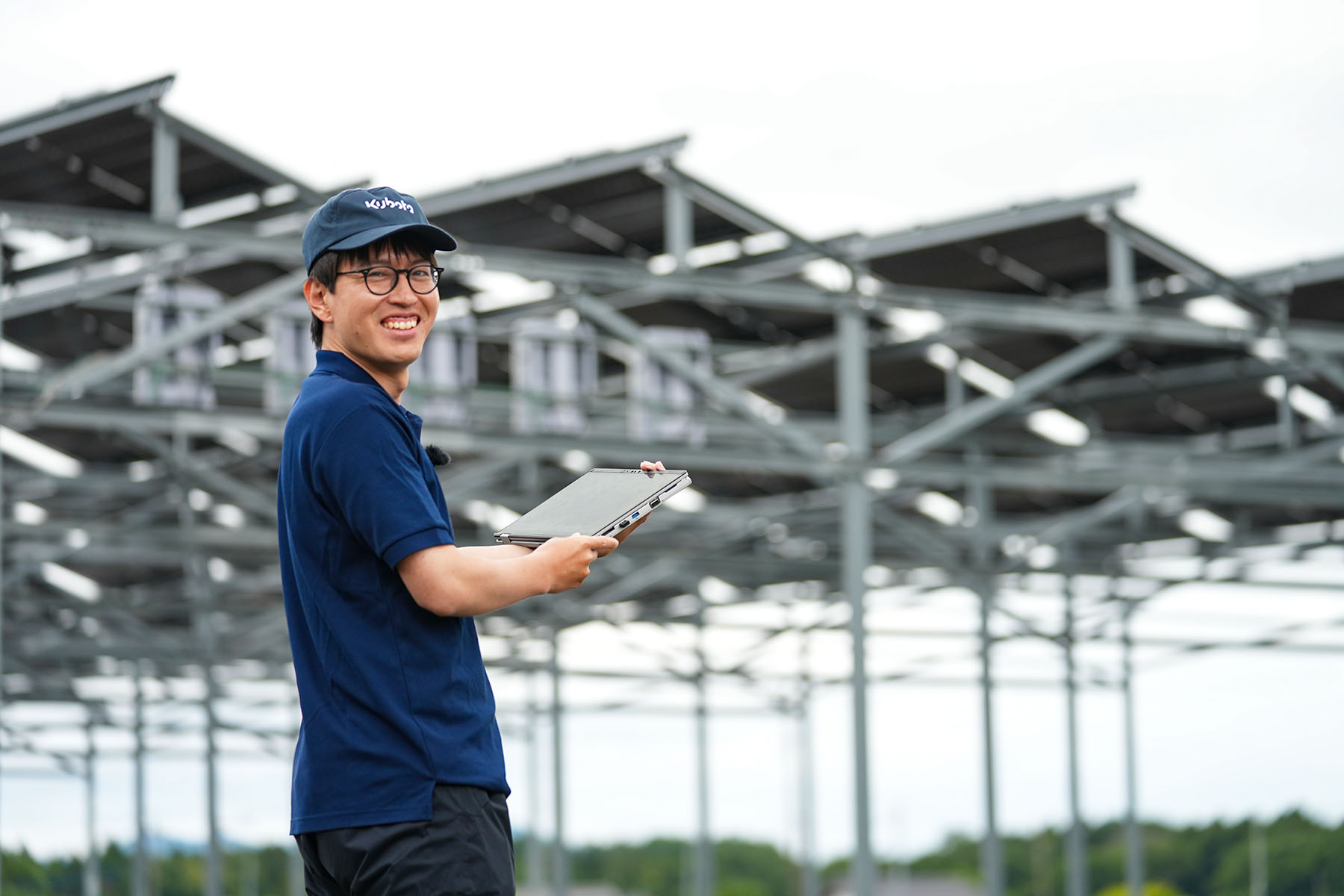
Generating electricity above farmland while crops grow below: This two-level approach to farming is beginning to catch on in Tochigi and Ibaraki prefectures, Japan. Kubota has been involved in agrivoltaics, the combined use of land for agriculture and solar power generation (also known as “solar sharing”), since July 2024. The company currently has around 50 systems in place and is planning to expand to about 200 in the future.
Kubota’s objective is an agrivoltaics system that the people of local communities are glad to have. Behind this initiative are two of the major challenges facing Japanese agriculture today: the shrinking agricultural workforce and increase in abandoned farmland, and the need to achieve a decarbonized society.
For many years, Kubota has supported Japanese agriculture through its agricultural machinery. In doing so, it has come to recognize that the possibility of farmland itself no longer being sustainable is a challenge the company itself must tackle.
The way to address this issue is through the agrivoltaics system, which sets up solar panels in the space above farmland and allows electricity to be generated while crops are grown below. The system preserves a region’s farmland while helping to revitalize farming and reduce greenhouse gas emissions, all while exploring a new model in which farming and electricity generation are both possible.
However, Kubota’s vision goes beyond simply installing solar panels over farmland.
Agricultural machinery must keep running, crops must keep growing, and farmland must be passed on to future generations of farmers. With these priorities in mind, what is the best way to design a solar power system? And how can the system be realized so that farmland itself becomes a new regional asset, with both crops and electricity used within the community? These are the questions that Kubota addresses through its unique solar sharing system.
Can farming and solar power truly be achieved together? We visited one of Kubota’s agrivoltaics sites to find out.
Generating Electricity While Growing Crops: How the System Works
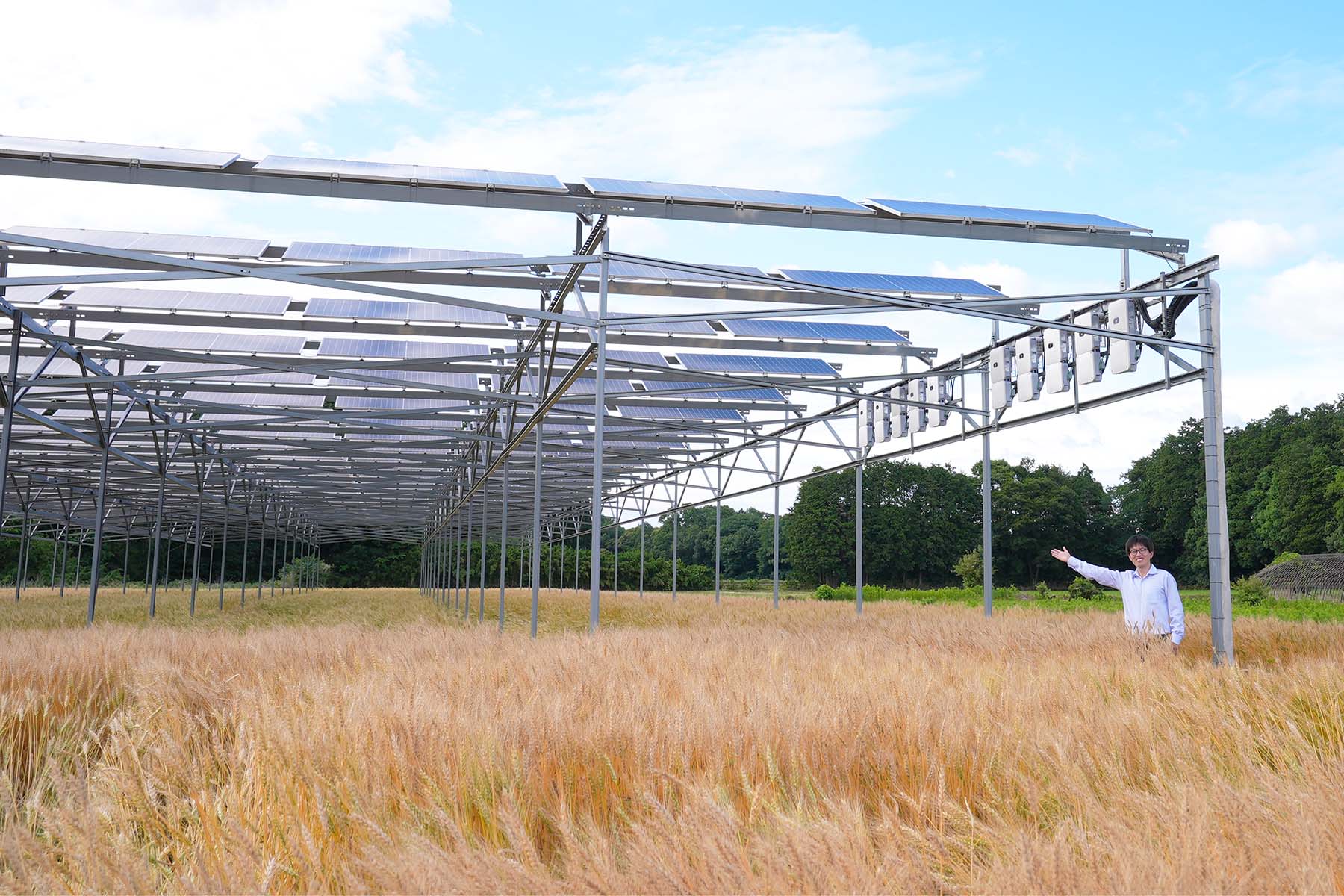
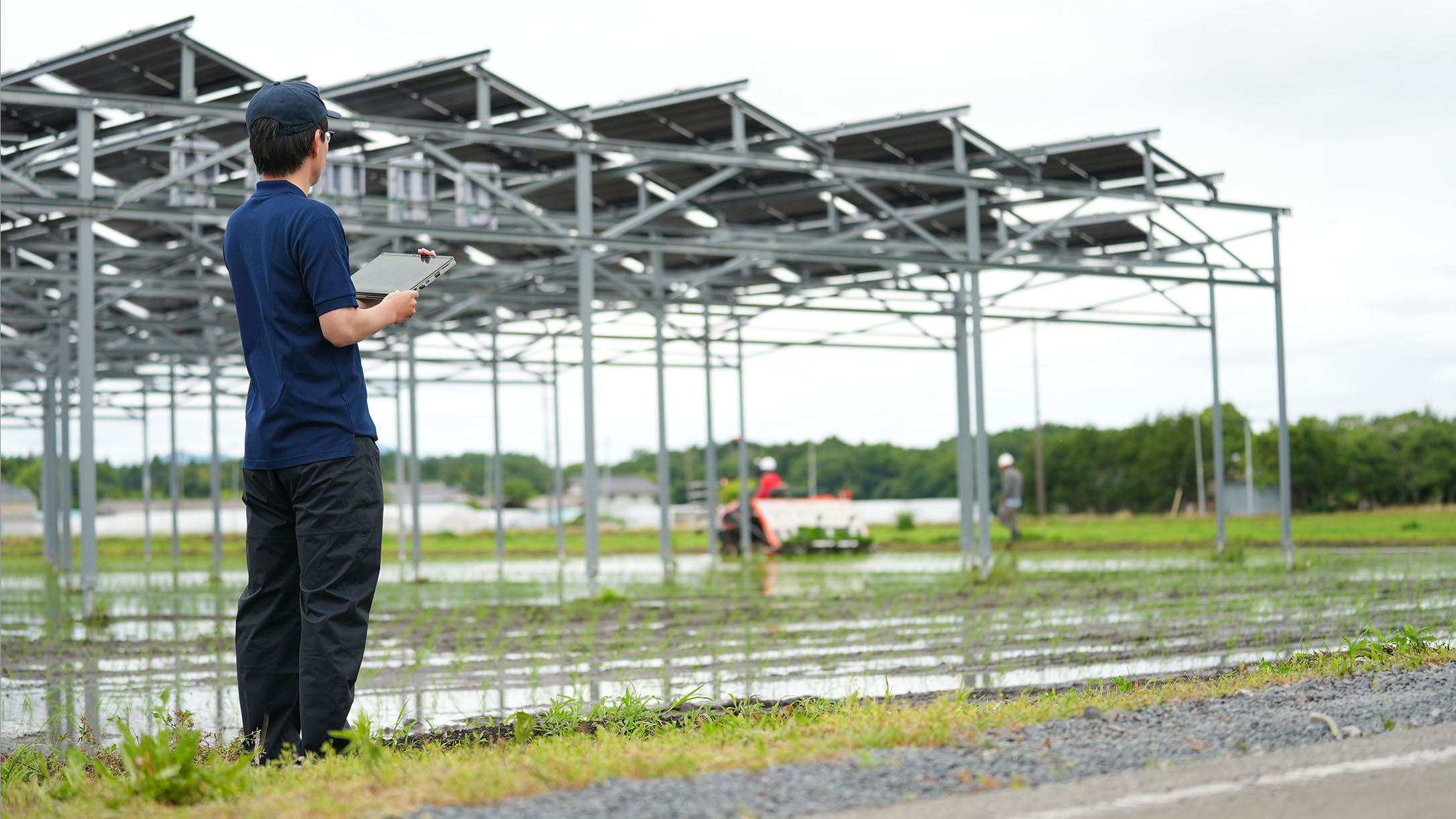
The main feature of agrivoltaics is that the power generation facilities are designed from the outset to allow farming to continue. Kubota designs its systems with careful attention to panel heights and spacing, allowing farmers to grow crops such as rice, wheat, and soybeans while continuing to operate agricultural machinery.
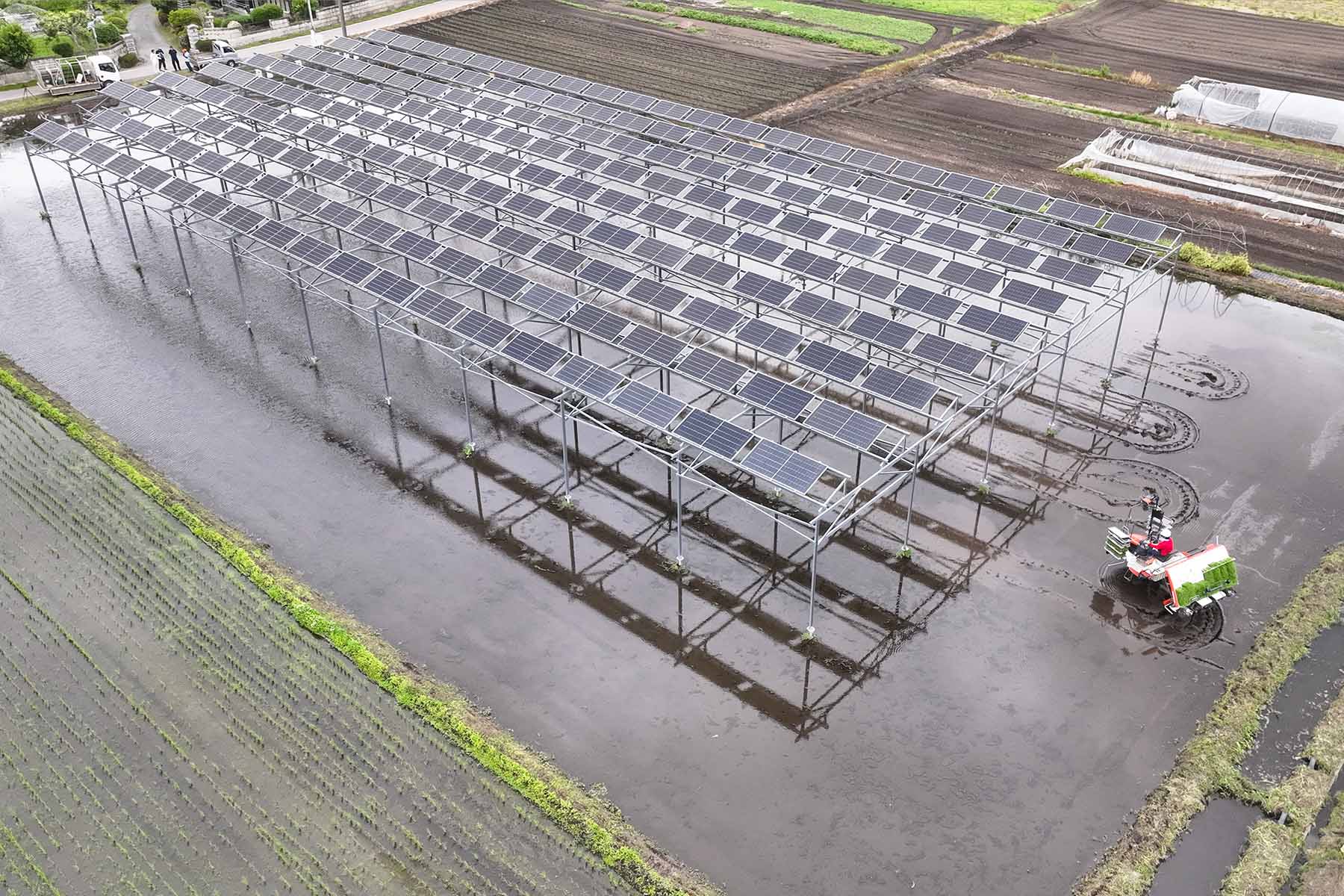
As Kubota moves this initiative forward, how does it position agrivoltaics as part of its broader business strategy? We spoke with Naoto Tani of the GX Business Development Department about this approach.

Protecting Farmland by Expanding Its Purpose
“Our starting point was this approach: If we’re going to revitalize agriculture, farmland has to serve a new purpose beyond just producing crops.”
As Tani explains, this approach led him to focus on agrivoltaics. From that approach also emerged the idea of utilizing farmland as a “two-level system.”
Until now, farmland had been used solely as a place for producing crops. With an agrivoltaics installation, the structure of food production on the first level (farmland) and green electricity*1 on the second level (overhead) generates new value. The concept of generating these two differing benefits of food and energy from the same piece of farmland marks the starting point of this project.
- *1. Green electricity refers to electricity generated from renewable energy sources such as sunlight, wind, and geothermal, with the benefit of producing zero CO2 during power generation.
So, what kind of farmland is best suited for an agrivoltaics system? According to Tani, the most vital part of pursuing this initiative is to ensure farmland’s sustainability.
“We’re focusing not only on land that's already been abandoned, but also on farmland that's still being cultivated today but may become difficult to maintain in the future due to the shortage of farmers, aging population, and other factors.”
Some farmland is no longer being cultivated but is given basic weeding and maintenance by the landowners so as not to become a nuisance to neighbors. There is also farmland that is difficult to cultivate due to its location or other factors, raising concerns about finding successors to take it over. Such kinds of farmland are becoming more common throughout Japan.
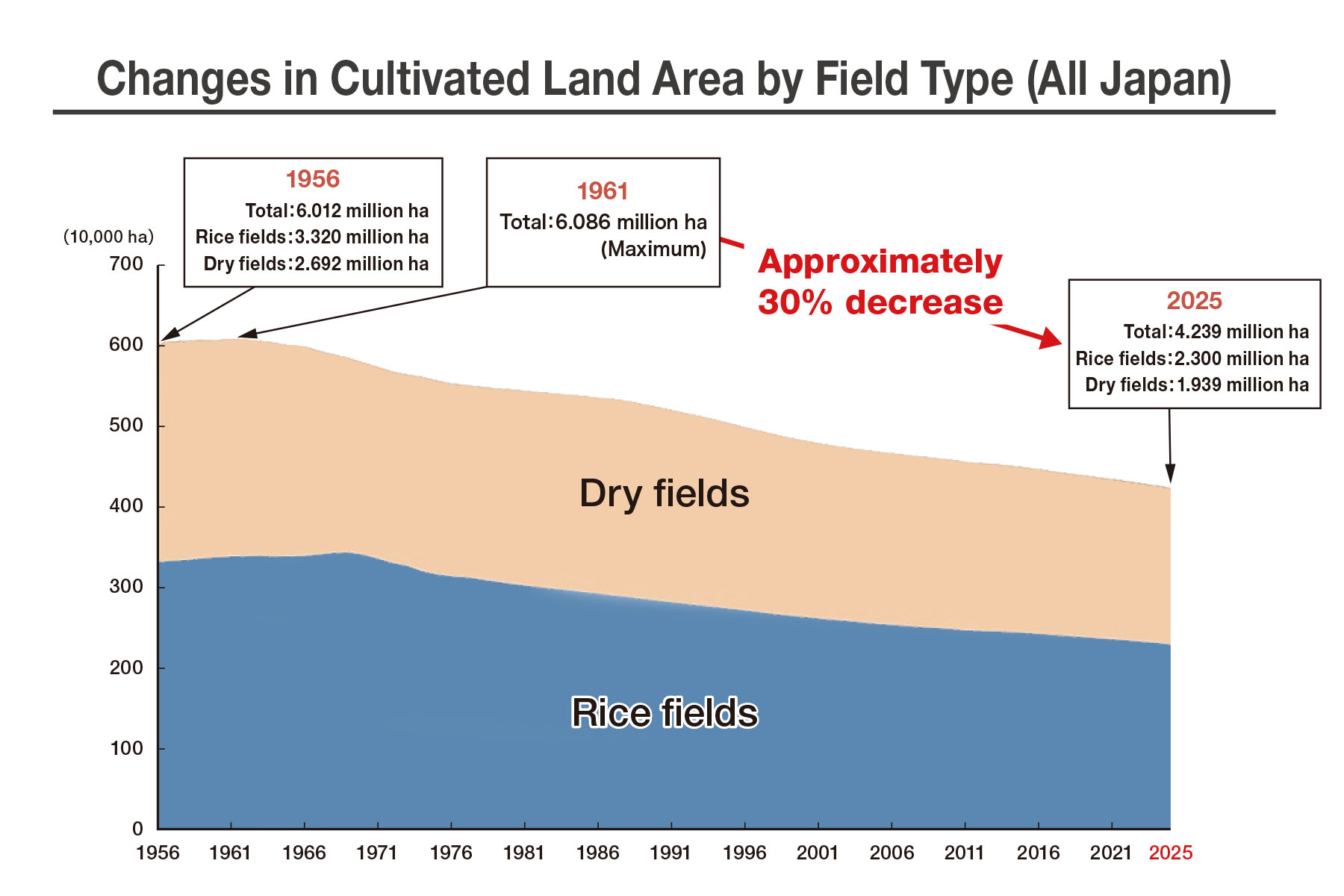
To create a system that enables farming to continue while making productive use of the land: This is the main purpose of Kubota’s project.
“Our goal is an initiative that provides continued support for the people who sustain agriculture. By creating two forms of value – food and electricity – from a single piece of land, we hope to eliminate the problem of abandoned farmland, create new sources of income for agricultural producers, and encourage more people to enter the agricultural sector.”
Tani says that achieving this vision will require the cooperation of many different stakeholders: Not only Kubota, but also regional farmers, local governments, financial institutions, and the people who use the electricity.
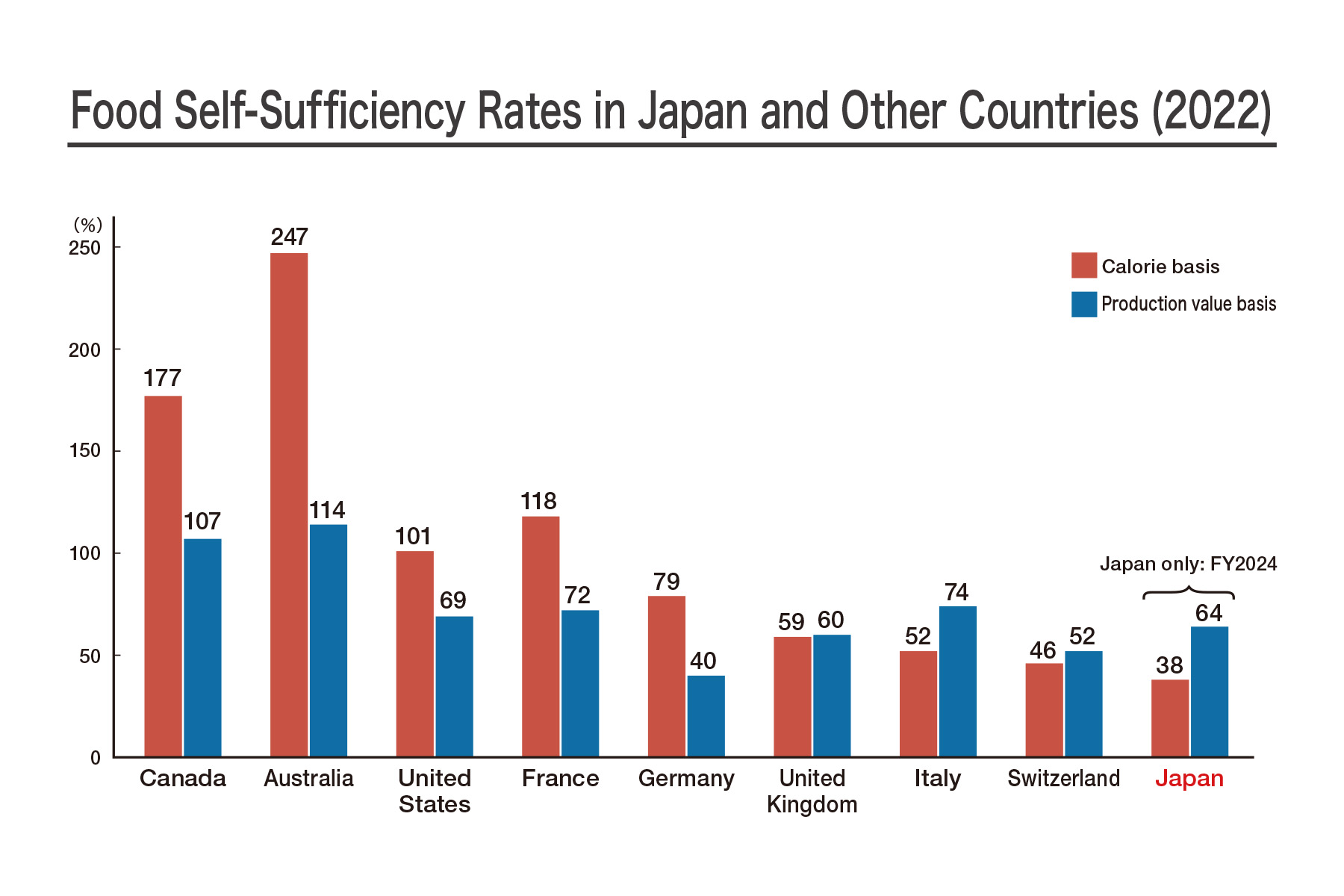
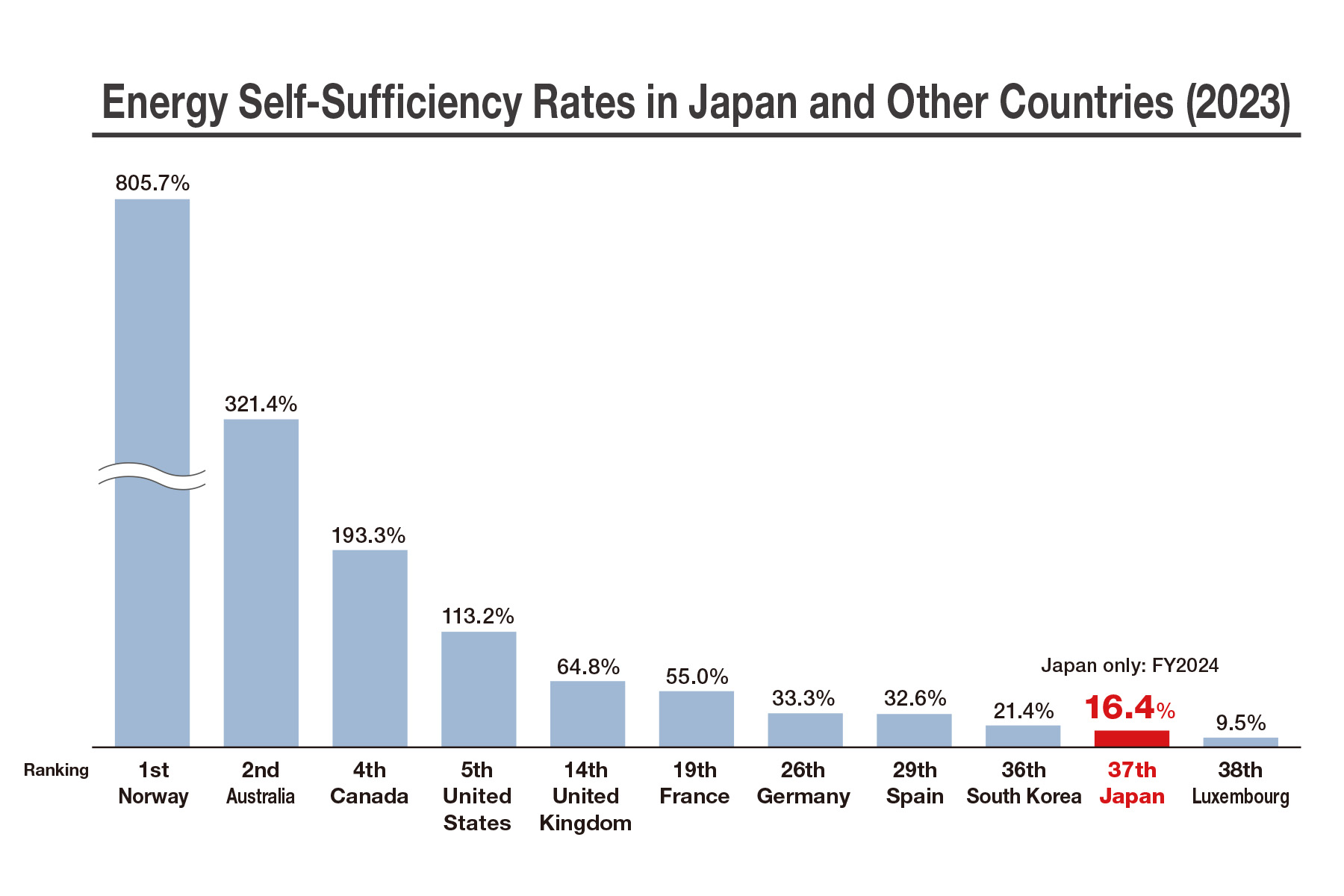
Plus, the potential of agrivoltaics extends beyond revitalizing regional agriculture. Japan faces not only a declining food self-sufficiency rate but also a low energy self-sufficiency rate compared to other nations.
The same farmland that produces food can also generate renewable energy. How can people make the most of limited land to address both food supply and energy needs? Tani sees Kubota’s project as a way to address the challenges of both food security and energy security.
Designing Solar Power Facilities Around Agriculture
For this project, Kubota owns and operates the solar power facilities and handles use of the electricity they generate, while Agroecology Co., Ltd. (headquartered in Haga Town, Tochigi Prefecture) manages the farming beneath the solar panels.
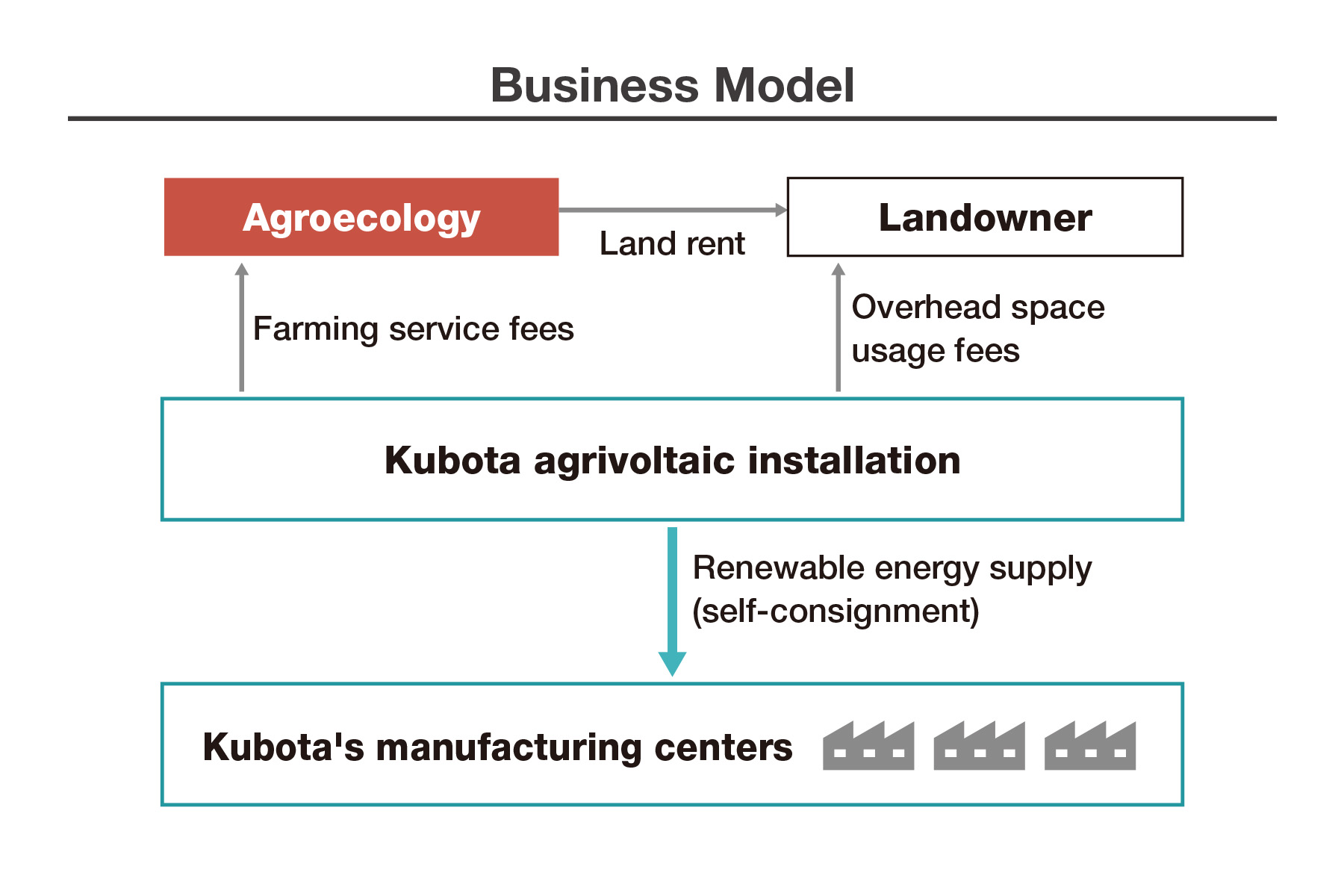
“With farming, the conditions, practices, and cultivation methods vary from region to region. That's why we entrusted the farming work to Agroecology, a company with a proven track record in local communities. Meanwhile, Kubota will ensure the project’s sustainability through operation of the solar facilities.”
Tani explains that this division of labor is one of the project’s advantages.
Agrivoltaics can only succeed if farming continues on the land. With that in mind, Kubota designed the solar facilities to ensure that agricultural machinery could do its work.
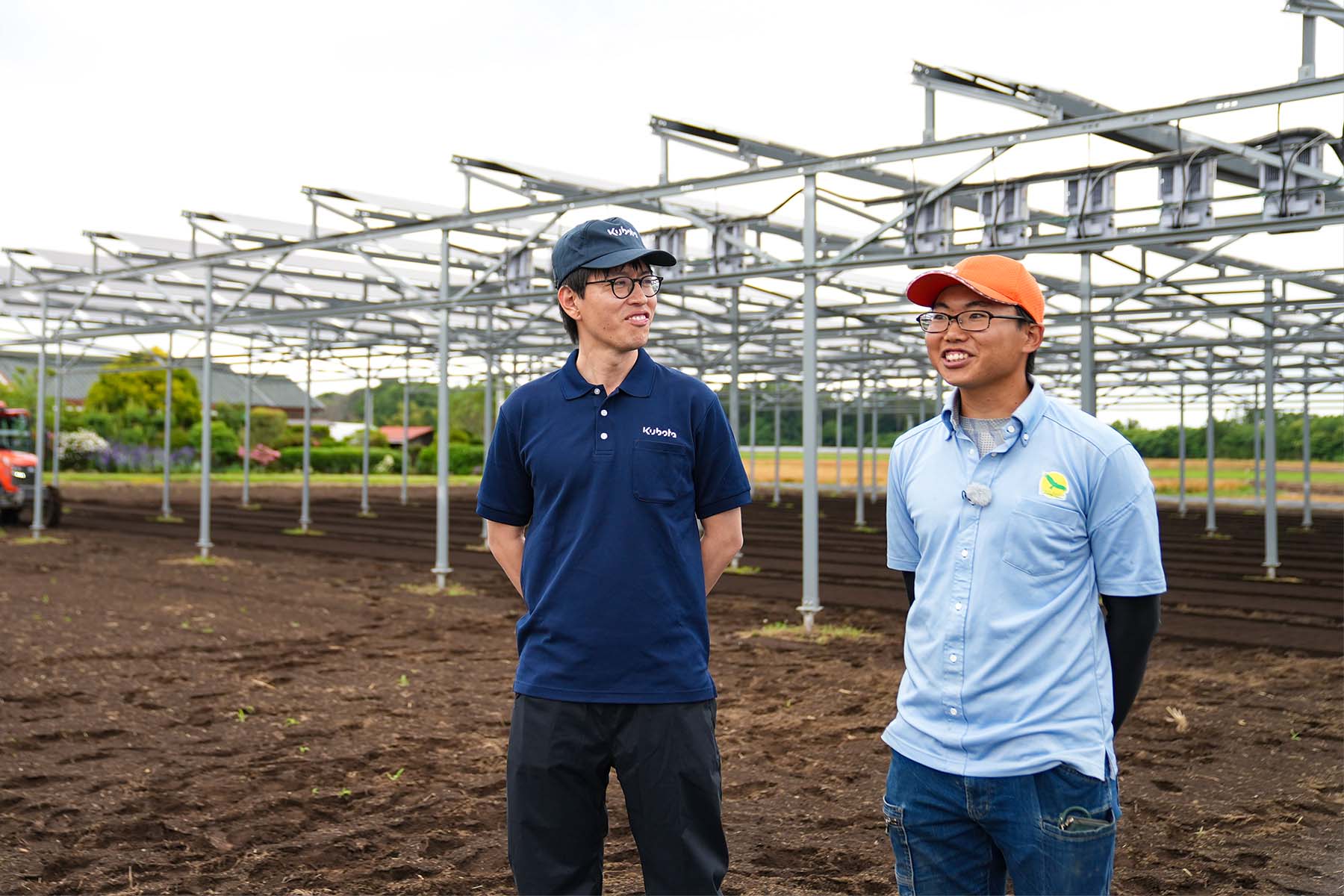
For example, the support columns are spaced five meters apart in all directions and set at a height of 3.1 meters, allowing tractors, rice transplanters, combine harvesters, and other machinery to operate. Space has also been provided around the edges of the farmland so that the machines can make turns. And panel layouts and shading rates have been thoroughly considered to ensure adequate sunlight for growing crops.
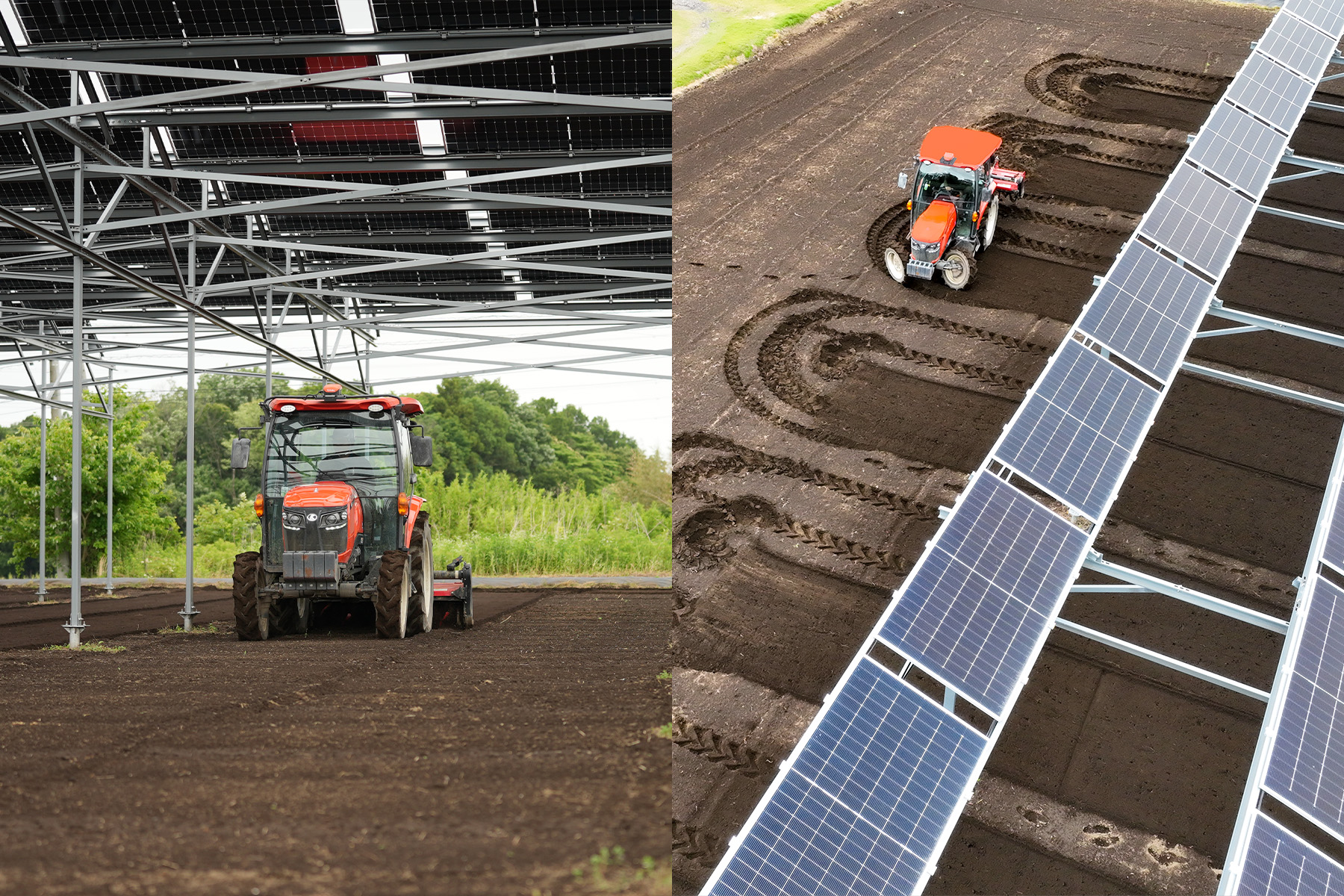
Right: Space is provided at the edge of the field so that farm machinery can make turns with ease.
These design specifications were decided by considering the optimal solar power configuration for each crop while drawing on the expertise of both Agroecology, which manages the agricultural operations, and Kubota, with its years of experience in the agricultural sector.
New Cultivation Methods Beneath the Solar Panels
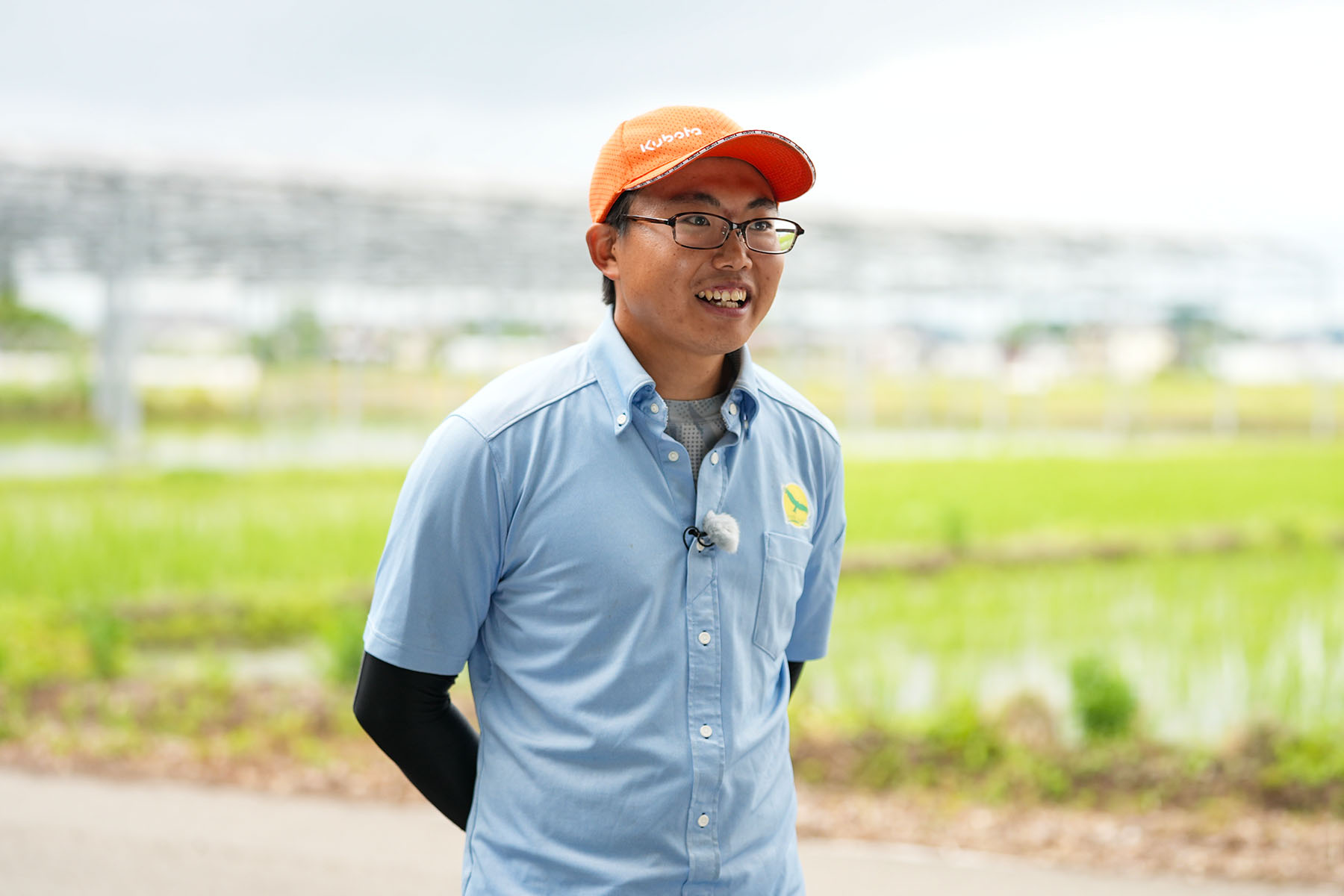
What challenges and innovations can be possible with farming beneath solar panels? Agroecology, which manages farming on the system’s lower level, grows crops including rice, wheat, and soybeans. Mr. Satoshi Kobayashi, who oversees the on-site operations, explains.
“The biggest difference from conventional fields is the amount of sunlight. Right now, the areas under the panels are shaded by about 33 percent, so if we used conventional cultivation methods, the crops would grow in different ways.”
In agrivoltaic fields, differences in crop growth can sometimes be seen between areas beneath the solar panels and other areas. With wheat, for example, the shade can slow ripening or, depending on the cultivation method, increase the risk of stalks bending or falling over.
To achieve consistent crop yields and quality, Mr. Kobayashi and his team place a strong emphasis on building healthy soil. This effort is largely supported by the company's own livestock operations.
The company produces compost from cattle manure. It also makes use of underutilized local resources to improve soil conditions, creating environments where crops can thrive. By steadily building practical experience on-site, the team is developing cultivation methods optimized for agrivoltaics.
“Even in shaded areas, we've shown that it's possible to grow high-quality crops,” says Mr. Kobayashi. “In some fields that had been abandoned, we have managed to increase yields through ongoing soil improvement. It’s been step by step, but we’re seeing encouraging results.”
Through their collaboration with Kubota, the team is building a system to establish agrivoltaics as a long-term business model for agriculture, not just a temporary trend.
“We want to create a new model for agriculture that gives the next generation hope for its future. Taking on this integration of agriculture, energy, and smart technology isn’t something any one company can do alone. Working with Kubota is valuable because it lets us take on initiatives that would be difficult for us to tackle by ourselves.”
This pursuit is being continued today in the agrivoltaics systems.
Navigating Regional Rules to Keep the Project Moving
As the project moved forward, however, the team encountered difficulties they had not anticipated.
Installing power generation equipment in a region requires advance approval from the local government. But policies for operating agrivoltaics systems are sometimes applied differently from one municipality to another, and in areas with few existing projects, there is sometimes a need to confirm national frameworks and proceed carefully, step by step.
Tani went through each procedure one by one, taking into account the perspectives and regional circumstances of each municipality. As a result, he recalls, obtaining approval in some regions required considerable time.
In addition, he stresses the need to reduce cases of inappropriately-managed agrivoltaics projects while building a system that is not swayed by differing applications in different municipalities. Having businesses, government agencies, financial institutions, and other stakeholders all involved together in the creation of a risk-reducing environment is what he believes is necessary to develop agrivoltaics as a sustainable industry.
Tani believes that by demonstrating appropriate agrivoltaics models, Kubota can gain understanding of communities and foster development of the system, which will eventually lead to new trends in overall society.
Making Agrivoltaics a Common Sight
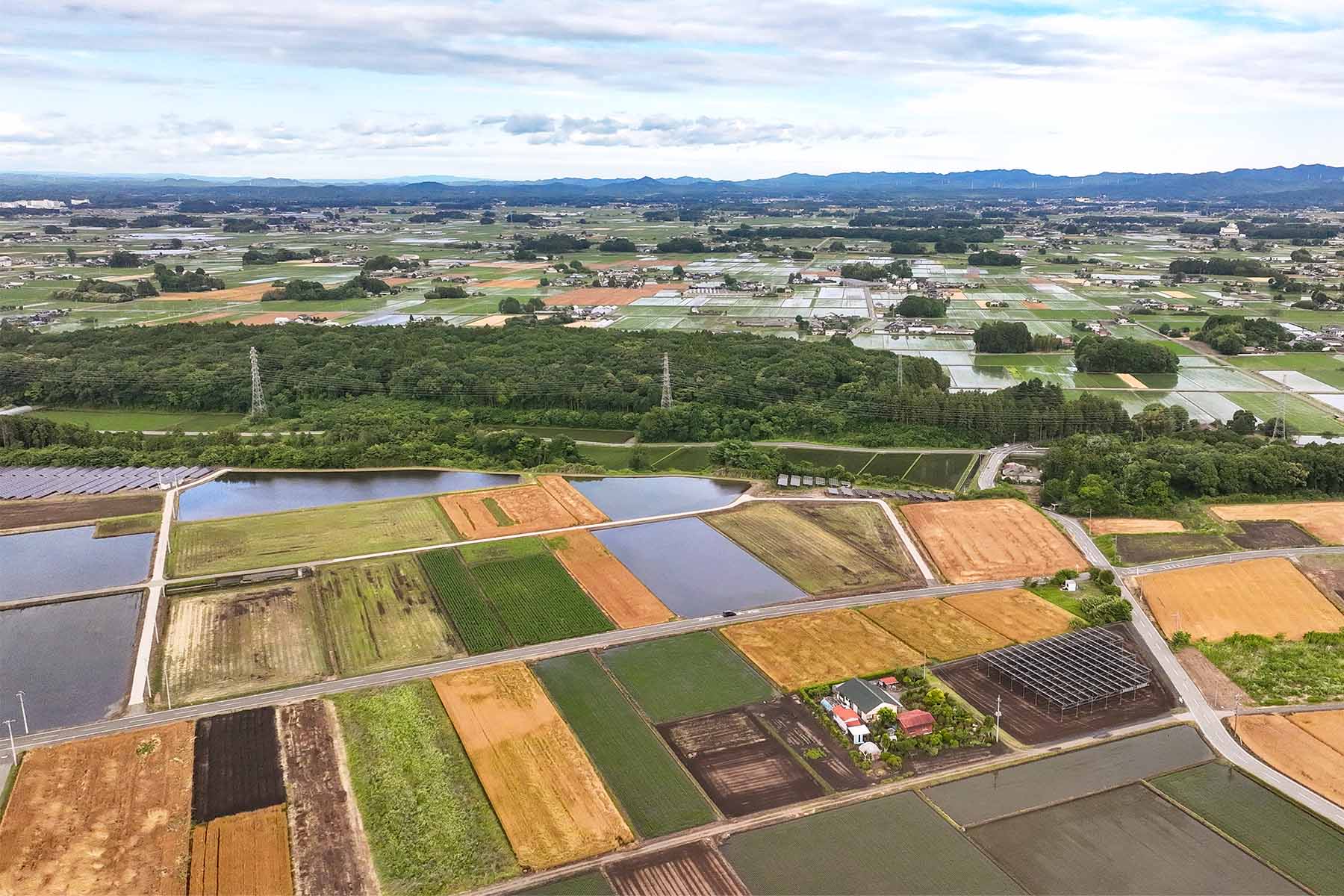
“We don’t farm to generate electricity; we generate electricity so farming can continue. We believe the continuation of farming is the main reason for agrivoltaics.” So says Tani on the philosophy at the heart of the project.
Kubota currently supplies the electricity generated through this project to its own manufacturing centers. This is part of Kubota’s efforts to achieve carbon neutrality. And because this is Kubota’s first foray into agrivoltaics, it launched the project through a self-consignment*2 system, through which the company sends the generated electricity to its own facilities.
- *2. Self-consignment: a system that allows electricity generated at a company’s own power generating facility in a remote location to be transmitted through the power grid and used at company facilities.
Looking ahead, Tani envisions a system that utilizes energy within the local community. He calls this a “regional asset.”
“For example, the electricity generated could be used at the city office, and the crops grown under the solar panels could be provided at local “michi no eki” (government-designated markets and rest areas found along major roads or highways) or restaurants. It could also provide an emergency power source during a disaster. I think it is important to do it in a way that makes local citizens feel they are glad to have it there.”
The value created by Kubota’s agrivoltaics project extends beyond electricity generation or revenues. To ensure sustainability of farmland while keeping both food and energy circulating within the region: The “regional assets” of which Tani speaks refer to these initiatives becoming a way of life that takes root in the community.
“I hope that in the future, when children in the community draw pictures of farmland, they will include solar panels, not because they’re special, but because they’re simply part of the landscape. That’s the future I’d like to see.”
Kubota will keep working toward that possibility.