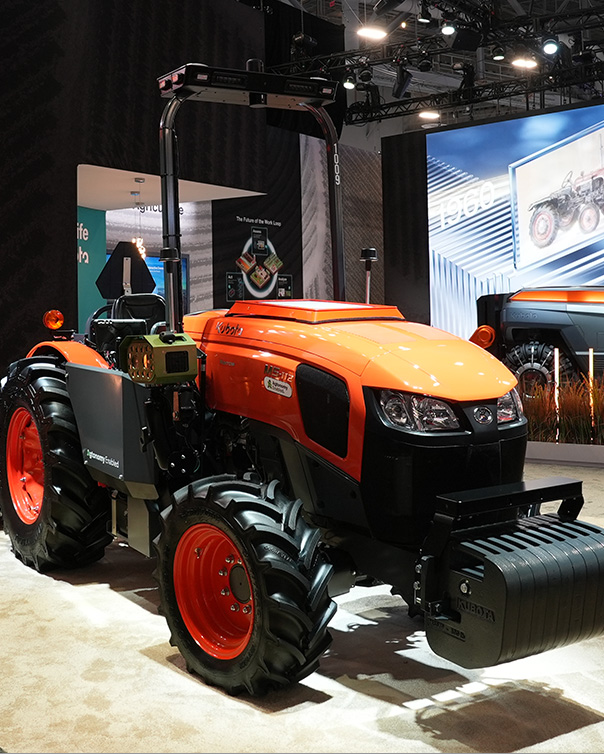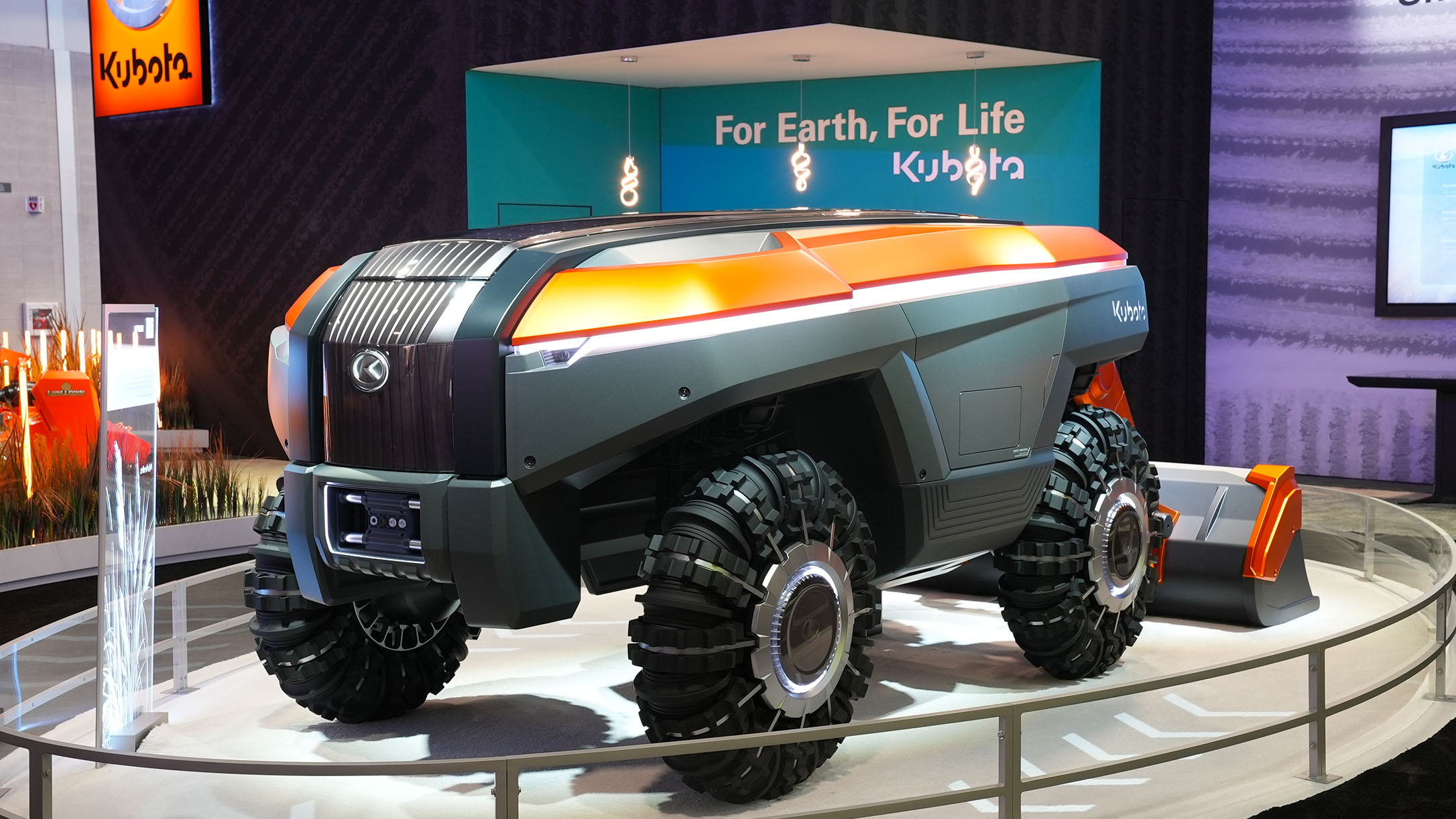
At two international events – Expo 2025 Osaka, Kansai and the CES® 2026 digital technology trade show in January – Kubota showcased concept models of its versatile platform robots, developed with a vision for the future of agriculture.
At Expo 2025, Kubota presented two types of versatile platform robots that perform unique roles, Type: V and Type: S, demonstrating the company’s commitment to environmentally conscious and sustainable farming. For the CES® 2026 exhibition, the focus shifted to Type: V. This article will spotlight the Type: V platform exhibited at both events.
What sort of robot is Type: V? And what kind of agriculture is it designed to make possible? Drawing on interviews with the development team’s engineers, who are primarily in their 20s and 30s, this article will explore the robot’s development process and future potential.
The Need for “Robots for the Future of Agriculture”
Type: V is designed to perform a wide range of tasks that have traditionally been performed by separate machines, including tilling, intermediate management, and harvesting. Achieving this level of versatility (multi-purpose) in a single robot is an extremely ambitious technical challenge.
So, why is Kubota attempting such a difficult development project? In recent years, while the global agricultural workforce is shrinking in size and advancing in age, there is a growing need for the environmental impact of agriculture to be reexamined. With this in mind, Kubota, which has been closely committed to the agricultural sector, took advantage of Expo 2025 to promote its concept of “planetary-conscious agriculture” that is friendly to the earth and people.
One key to realizing this vision for planetary-conscious agriculture is “eliminating inefficiencies in agriculture while reducing the burden on farmers.” Type: V is being developed as a technological solution to help achieve these goals.
Three Concepts Behind Type: V
Type: V is more than just an unmanned autonomous agricultural machine. It is a versatile platform robot designed to perform a wide range of tasks fully autonomously, not only in agriculture but in other areas as well.
At the core of its design is an agricultural version of the CASE* concept. Specifically, it focuses on three elements – multipurpose, scalability, and fully autonomous intelligent operation – as it aims to address the broader social issues facing agriculture.
Type: V Concepts

| Multipurpose (Shared & Services) |
|
| Scalability (Connected) |
|
| Fully autonomous /intelligent operation (Autonomous, Electric) |
|
- *CASE: Connected, Autonomous, Shared & Services, and Electric; technological advances that are expected to greatly change concepts in the automotive industry.
To realize these concepts, Type: V incorporates four key features: omnidirectional movement, a transformable body, automatic implement attachment and detachment, and super-fast charging.
However, there has never been an agricultural machine or robot with this combination of capabilities. The engineering team working on this first-of-its-kind robot is confronting numerous challenges and overcoming them one by one.
For this article, we interviewed the young engineers behind Type: V to learn more about the challenges they have faced and the rewards of working on such a groundbreaking project.
Taking No Cues from Existing Machinery
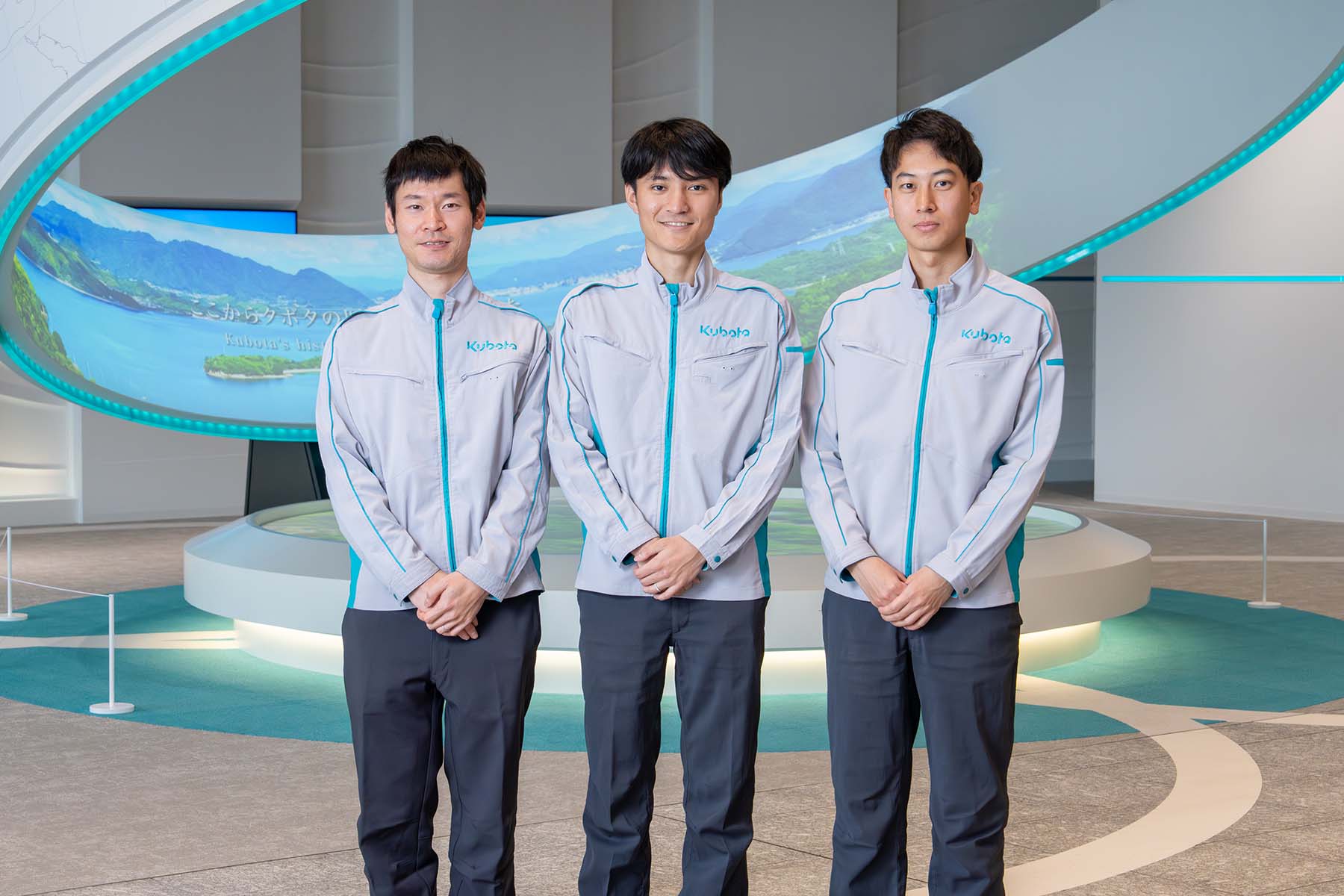
The development for Type: V began with a team assembled especially for the purpose of creating this entirely new kind of agricultural machine. “We avoided using existing agricultural machinery as a reference, in a good way,” recalls Ginji Matsuoka. He has been involved since inception and is responsible for electrical design.
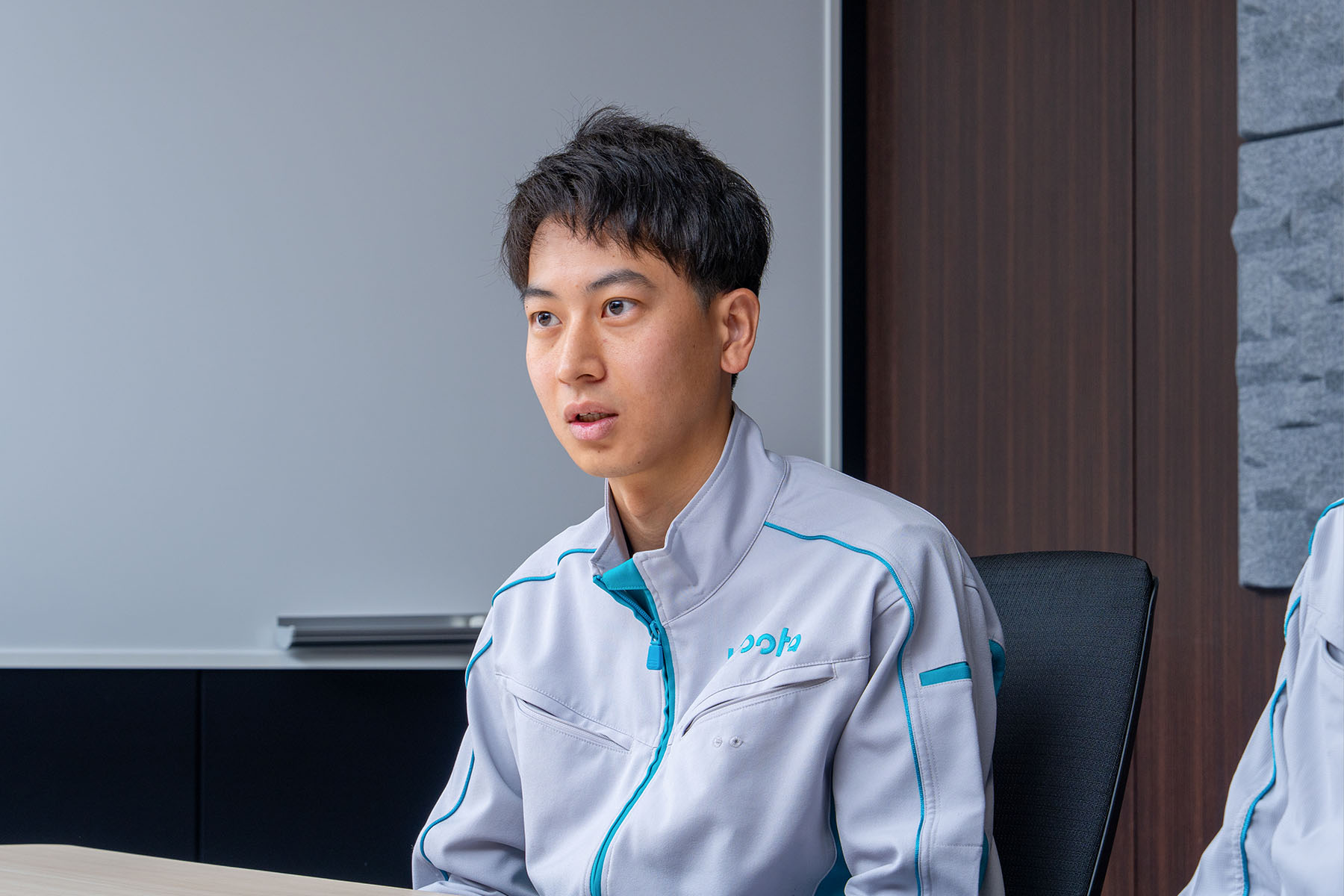
The development team began their discussions by going back to basics: “What kind of agriculture can address the social challenges facing the industry, including labor shortages and climate change?” “How can crops be grown, and what kind of work leads to the best yields?”
In the early stages, the team did not even have a concept of how the machine would be shaped. Instead, says Matsuoka, a wide range of ideas were explored, including concepts like “a machine that moves autonomously through the soil like a mole to perform tilling.” The place the team ultimately arrived through these discussions was a new concept for agricultural machinery: A transformable robotic vehicle capable of adapting to a variety of field and crop types.
The Challenges of Forming a First-of-its-kind Machine
At the same time, developing a machine that had no precedents brought multiple challenges, so the team had to tackle each issue through trial and error. “Type: V is a completely new kind of vehicle, so there was almost nothing we could use as a reference. We keenly felt how difficult that was,” says Tatsuya Kamada, who took charge of mechanical systems.
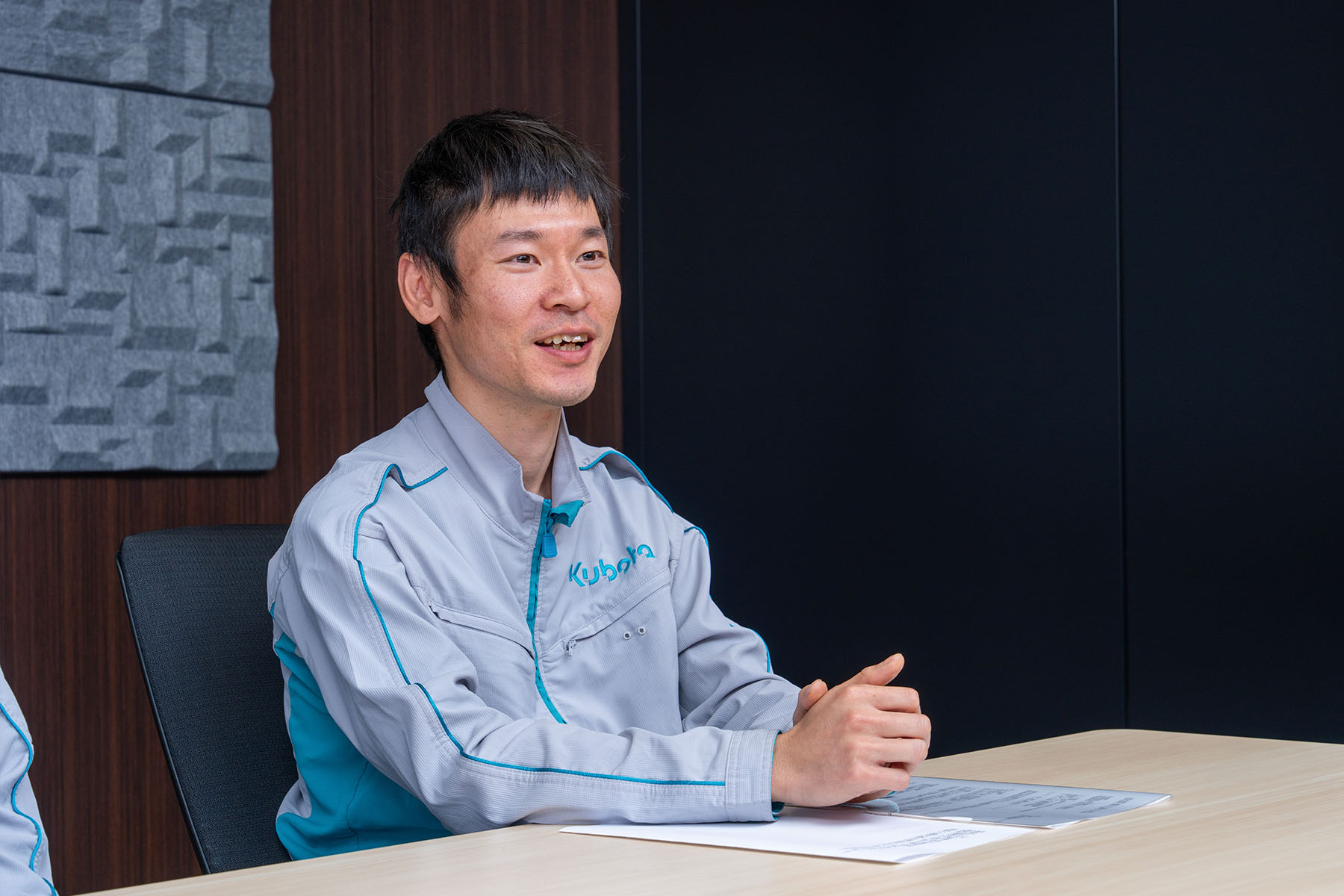
One major mechanical challenge was achieving 360-degree wheel rotation, one of Type: V’s defining features. This functionality allows for smooth and unrestricted movement, but the wheels did not perform as intended in the early prototype stages. More testing revealed that the machine’s total weight had exceeded initial estimates, causing the gears to lock.
Due to the restricted development schedule, it was not feasible to fully rebuild the completed frame from scratch. Instead, Kamada focused on ensuring structural strength while minimizing additional modifications within a limited scope. He says that by working with other teams, running repeated simulations, and tweaking assembly methods, his team ultimately succeeded in achieving smoother wheel rotation.
Type: V features large wheels with 360-degree rotation. These wheels were just one of the many functions that presented numerous challenges in the development process to realize their vision.
Yutaro Yoshida is in charge of the intelligent systems. Like Kamada, he recalls, "It was extremely difficult to make something move that had never existed before." In developing the Type: V, Yoshida focused on safety design based on the premise of fully autonomous operation.
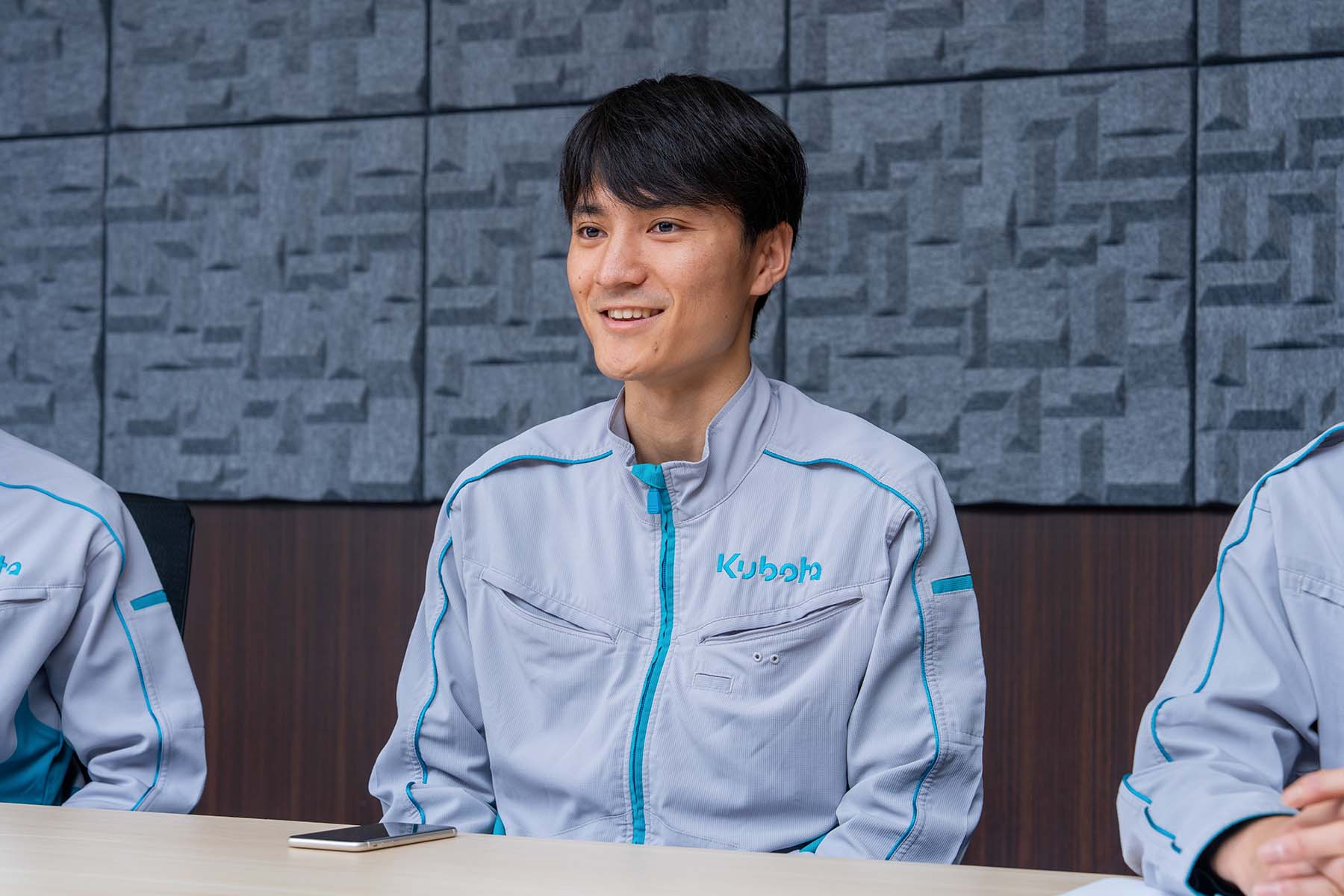
Conventional agricultural machinery uses human operators to ensure safe operation by monitoring the surroundings. In contrast, Type: V is premised on fully autonomous operation, meaning safety must be achieved under normal conditions through the system’s software. This means its mechanisms must allow the machine to transition to a safe state on its own, even in unexpected situations such as communication failures. Yoshida and his team say they have implemented a range of safeguards to prevent risks from escalating, including controls that reliably shut the machine down when necessary.
However, even when systems under development function correctly in simulations, they do not always perform the same way in real-world testing. During actual development, the team encountered an issue in which electrical noise from the motor interfered with communications. For such problems, which cannot be predicted through theoretical calculations, Yoshida recalls that the engineers worked on-site to identify the causes one by one and implement a series of improvements.
Because the machine is unlike any other before, solutions are seldom apparent right away. The development of Type: V has required persistent and painstaking effort; however, the engineers involved say this has been truly rewarding.
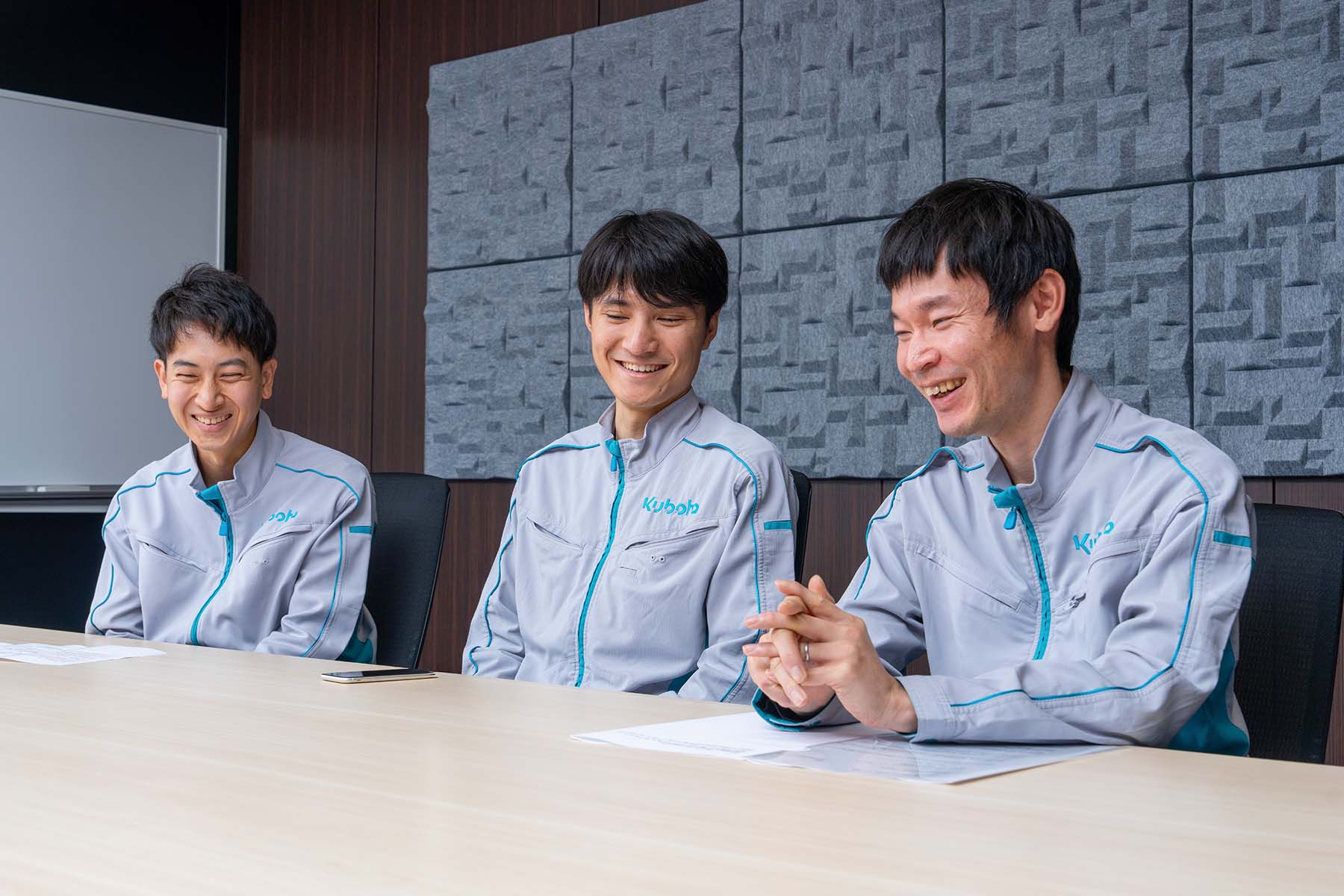
For the battery, Matsuoka worked hard to achieve both light weight and the operating capacity required for agricultural use. “It’s rewarding to use cutting-edge technology to address some of the most pressing challenges facing agriculture today,” he says. Kamada adds, “Being involved in everything from design to prototyping and evaluation has been a great learning experience, and deeply meaningful.” And Yoshida, the team’s youngest member, says, “This is a supportive environment for development because they respect my ideas about what I want to take on and how I want to approach it.”
Key to Type: V Advancement “Take it to the Field and Try it for Ourselves/Confirm it Firsthand”
Following its unveiling at Expo 2025 and CES® 2026, Type: V is now entering a phase of evaluation in real-world environments.
Up to this point, testing had mostly been conducted on concrete surfaces. Now the current design will be evaluated in actual fields for a detailed assessment of how it functions. The team plans to apply these insights toward further improvements for Type: V and applications toward related technologies for other products.
To understand how a versatile platform robot like Type: V can be applied in real agricultural settings and make improvements, it is essential to identify potential issues that farmers might face in addition to the obvious challenges. For this reason, the development team places importance on visiting farms in person to observe working conditions and workflows firsthand. On this, Kamada looks ahead: “We want to be on-site and see things for ourselves so we can make judgments about what functions are truly needed and how the machine should work in the field,” he says.
There is still room for improvement in Type: V, including lighter weight through integration of the battery and electronic cooling system and further development of implement auto-attachment and detachment functions through refinements to camera recognition technologies.
Aiming for Farming with Minimal Human Intervention
What kind of future for farming does this team envision through the development of Type: V?
Matsuoka says his aim is to reduce the burden on farmers while enabling more efficient agriculture. “Looking ahead, I want to minimize human intervention as much as possible,” he says. “The goal is to make farming more convenient and stress-free, whether people have to make decisions or even making it so they don’t have to make decisions at all.” Yoshida agrees: “Ultimately, the ideal is a style in which tasks are completed just by the farmer giving instructions. Instead, if farmers can use the time they spent on manual work for business strategies and other tasks, they should be able to take on a stronger role as managers.”
Kamada is also focused on improving efficiency through advanced coordination between the machine and its implements. “Type: V allows for one-of-a-kind implement movements, and this could allow for further streamlining of unmanned work,” he says. “We’re aiming not just for automation, but for greater overall work efficiency in steps beyond that.”
By leveraging cutting-edge technologies, companies can address serious challenges such as labor shortages, aging of workers, and environmental impact. With this vision of the future in mind, Kubota’s engineers are pushing forward seeking to transform agriculture into a more sustainable system. Their quest to achieve planetary-conscious agriculture continues.


Related Articles